 Business Intelligence
 Customer Relationship Management
 Document Management
 Finance Management
 Governance, Risk & Compliance
 Human Resources
 Planning and Scheduling
 Product Data Management
 Production Management
 Project Management
 Retail Management
 Sales Management
 Service Management
 Small and Midsize Enterprises
 Supplier Relationship Management
 Supply Chain Management
 Warehouse Management
 e-Commerce
Manufacturing teams often carry the pressure of inefficient systems, manual processes and workarounds.
Discover how better operational structure can support wellbeing in the workplace.Workplace stress is not a new conversation. Tight deadlines, operational pressure and competing priorities have always been part of running a business.
But in recent years, a different issue has begun to surface more frequently in organisations across many industries: burnout.
While stress and burnout are often used interchangeably, they are not the same thing. Misunderstanding the difference can prevent businesses from addressing the root cause of employee wellbeing issues.
Stress Is Temporary. Burnout Is Prolonged.
Stress is typically short term. It often appears during busy periods, project deadlines or operational challenges.
In many cases, once the pressure passes, employees return to a more balanced workload.
Burnout, however, develops when stress becomes constant and unresolved. The World Health Organisation describes burnout as a syndrome resulting from chronic workplace stress that has not been successfully managed.
Rather than a temporary spike in pressure, burnout is characterised by:
- Ongoing exhaustion
- Reduced motivation or engagement
- Difficulty concentrating
- Feeling detached from work
- Declining productivity
When employees experience burnout, simply encouraging them to “take a break” or “push through a busy period” rarely solves the problem.
Reviewing the structure behind day-to-day operations can be an important first step in reducing that pressure.

The Hidden Drivers of Burnout
Many organisations focus on surface level factors when discussing mental health. Flexible working policies, wellbeing initiatives and awareness campaigns are all valuable steps.
However, burnout is often driven by deeper operational issues within the business itself.
These can include:
- Constant firefighting and reactive working
- Lack of visibility across operations
- Repeated manual processes and duplication
- Poor communication between departments
- Inaccurate or delayed data affecting decision-making
When employees are forced to work around inefficient systems or unclear processes every day, pressure becomes part of the normal workflow rather than an occasional challenge.
Over time, this can create a sustained level of stress that contributes directly to burnout.
Why Businesses Need to Look Beyond Individuals
Mental health conversations sometimes focus heavily on the individual. Advice may centre on resilience, coping strategies or personal wellbeing habits. Employees may also not always feel comfortable discussing what they need to do their job more effectively.
While these factors are important, they do not always address the root causes of workplace pressure.
If the underlying systems, processes or workload structures within a business are creating constant pressure, employees may feel they are personally responsible for managing a problem that is structural.
This can lead to frustration, disengagement and eventually burnout.
Recognising the organisational factors that contribute to stress is therefore an important part of supporting employee wellbeing.
A Healthier Approach to Workplace Pressure
Businesses that successfully reduce burnout often focus on improving the environment employees work within, rather than simply encouraging individuals to manage pressure better.
This can include:
- Improving visibility across operations and workloads
- Reducing manual processes and duplication
- Ensuring data is accurate and accessible
- Creating clearer planning and scheduling processes
- Encouraging open communication across teams
When employees have the tools and systems needed to perform their roles effectively, pressure becomes more manageable and work becomes less reactive.
Supporting People by Strengthening Systems
Mental health awareness continues to grow across workplaces, which is an important step forward. However, meaningful progress often requires looking beyond wellbeing initiatives alone.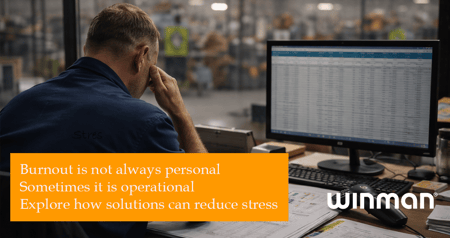
Sometimes the most impactful improvements come from reducing the operational pressures employees face every day.
When systems support people properly, businesses not only improve efficiency, they also create a more sustainable working environment for the teams that keep operations running.
Supporting Employee Wellbeing Through Better Visibility
One of the challenges businesses face when managing workplace wellbeing is visibility. Leaders may recognise that teams are under pressure, but without clear insight into workloads, absence trends or operational bottlenecks, it can be difficult to address the root cause.
This is where business systems can play a valuable role.
Modern Enterprise Resource Planning (ERP) platforms are designed to provide greater visibility across operations, helping organisations understand how work is flowing through the business and where pressure points may exist. When planning, scheduling and operational data are easier to access, teams are less likely to spend time chasing information, duplicating data or working around disconnected systems.
Reducing these types of daily frustrations can make a meaningful difference to the working environment.
Supporting HR and Absence Management
Many ERP platforms also include integrated HR capabilities that allow organisations to manage people information alongside operational data.
This can support businesses in areas such as:
- Tracking sickness and absence patterns
- Managing return-to-work processes
- Recording employee wellbeing conversations
- Monitoring workloads and team availability
- Ensuring managers have accurate workforce information when planning work
Having this information in one place can help businesses identify patterns earlier and respond more proactively when employees may be struggling.
Rather than reacting only when problems escalate, organisations can begin to recognise trends that may indicate rising pressure within teams.
Creating a More Sustainable Working Environment
Mental health awareness continues to grow across workplaces, but awareness alone does not remove the operational pressures employees face each day.
By strengthening both systems and processes, businesses can reduce unnecessary stress, improve visibility and create a more structured environment for teams.
When employees are supported by clear processes, accurate information and effective tools, organisations are better positioned to maintain both operational performance and employee wellbeing.
To learn more about how WinMan can support your operational and employee needs contact us today.
Take a look at how ERP can support your employees' well-being.




.png?width=120&height=120&name=MicrosoftTeams-image%20(4).png)