 Business Intelligence
 Customer Relationship Management
 Document Management
 Finance Management
 Governance, Risk & Compliance
 Human Resources
 Planning and Scheduling
 Product Data Management
 Production Management
 Project Management
 Retail Management
 Sales Management
 Service Management
 Small and Midsize Enterprises
 Supplier Relationship Management
 Supply Chain Management
 Warehouse Management
 e-Commerce

Discover how Enterprise Resource Planning (ERP) traceability, mobile data capture and Business Intelligence improve manufacturing visibility, compliance plus operational decision-making.
Manufacturing businesses generate valuable data throughout every working day. Production updates, stock movements, labour activity, quality checks plus dispatch information can all reveal what is happening across the operation.
However, simply collecting information does not guarantee better visibility. The real value comes from capturing accurate data at the point of activity, then turning it into practical insight.
Want to see how connected ERP data could support your manufacturing operation?

What is ERP traceability?
ERP traceability allows manufacturers to follow materials, components plus finished products as they move through the business. It creates a connected history of where an item came from, how it was used or where it was dispatched.
Depending on the operation, this may include:
- Batch or serial number traceability
- Raw material movements
- Production progress
- Labour time
- Stock availability
- Quality information
- Works order status
- Picking or dispatch activity
- Purchasing performance
- Sales order progress
When these areas are managed through one ERP system, teams can access a more consistent view of the business. This reduces reliance on separate spreadsheets, manual updates or disconnected platforms.
Data capture is the foundation of traceability
Business Intelligence or manufacturing traceability is only as useful as the information behind it.
If production updates are recorded late, dashboards may present an outdated picture. Missing shop floor information can also affect stock accuracy, costing plus production planning.
Capturing information as close as possible to the point of activity helps create a reliable data trail. Employees can record what has happened while the details are still current.
This gives managers greater confidence when reviewing performance or making operational decisions.
Bringing data capture closer to the activity with WinMan Go
WinMan Go extends ERP data capture beyond a fixed workstation. It allows information to be recorded using compatible mobile devices closer to where work takes place.
This can support activities across the shop floor, warehouse or wider operation. Employees can update relevant information without returning to a desktop computer for every transaction.
Bringing data capture closer to the task can help businesses:
- Reduce delays between an activity taking place plus appearing in the ERP system
- Improve the accuracy of stock movements
- Strengthen batch or serial number traceability
- Create a clearer record of operational progress
- Reduce duplicated data entry
- Give office teams more current information
- Support more responsive production decisions
Mobile data capture is not only about replacing paperwork. It connects physical activity with the wider ERP system, creating a stronger foundation for traceability or reporting.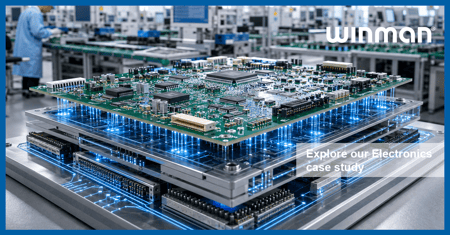
Turning ERP data into Business Intelligence
Once accurate information is captured, Business Intelligence tools can help manufacturers interpret it.
Dashboards or reports can highlight trends that may be difficult to recognise within individual transactions. They can also help teams focus on the information most relevant to their responsibilities.
For example, manufacturers may use ERP reporting to explore:
- Production output against planned targets
- Current work order progress
- Stock shortages affecting future jobs
- Purchasing trends
- Supplier performance
- Labour or machine efficiency
- Product costs
- On-time delivery performance
- Quality issues or recurring delays
This helps move reporting away from simply describing what has already happened. The same information can support faster action when performance begins to change.
Why does real-time manufacturing visibility matter?
Delays can become more expensive when they remain hidden.
A missing material may affect production before the purchasing team becomes aware of the problem. An inaccurate stock figure could influence planning decisions, while an unrecorded production update may create uncertainty for customer service teams.
More timely ERP data can help manufacturers identify issues earlier. It can also provide different departments with a shared view of operational priorities.
This becomes especially valuable during busy Q4 periods, when customer deadlines or seasonal demand may place additional pressure on the business.
Supporting electronics manufacturing traceability
Electronics manufacturers often need detailed visibility across materials, components plus finished products.
Batch or serial number traceability can create a clearer history of the items used during production. This may support quality investigations, customer requirements or product recalls.
A connected ERP system can help businesses answer important questions more quickly:
- Which components were used?
- Where did the materials come from?
- Which production order created the product?
- When was the item manufactured?
- Where was it dispatched?
- Are other products affected by the same issue?
Keeping this information within the wider ERP record can reduce the time spent searching across separate systems.
Are you collecting data without using it?
Many businesses already capture significant amounts of operational information. The challenge is making sure the data is complete, timely plus accessible.
A useful ERP traceability review could consider:
- Which activities are still recorded on paper?
- Where are employees entering the same information more than once?
- How quickly do shop floor updates reach planning teams?
- Can managers access the information they need without requesting a new spreadsheet?
- Are reports helping employees take action?
- Can materials or products be traced without searching multiple systems?
- Could mobile data capture improve accuracy at the point of activity?
These questions can reveal gaps between the information a business collects plus the insight it can actually use.
Smarter manufacturing begins with connected information
Smarter manufacturing does not always require an immediate large-scale technology project. It may begin with improving how existing information is captured, shared or interpreted.
Combining ERP traceability, WinMan Go plus Business Intelligence can create a connected flow of operational data. Activity can be recorded closer to where it happens, while dashboards help turn those records into useful insight.
The result is better visibility across manufacturing operations. Teams can respond sooner, make more informed decisions plus plan with greater confidence.
See how WinMan ERP can connect mobile data capture, manufacturing traceability and Business Intelligence across your operation.
Book a tailored demonstration to explore how it could work with your processes.

Frequently asked questions
How does ERP improve manufacturing traceability?
ERP software can record batch numbers, serial numbers, material usage plus production history. This helps manufacturers trace products backwards to their components or forwards to their destination.
What is the difference between tracking and traceability?
Tracking shows the current location or progress of an item. Traceability provides a more complete history, including its source, production journey plus final destination.
What is WinMan Go?
WinMan Go provides mobile access to relevant WinMan ERP functions. It helps employees capture information closer to the point of activity, supporting more timely operational records.
Can ERP traceability support electronics manufacturers?
Yes. ERP traceability can help electronics manufacturers manage component records, serial numbers, production history plus stock visibility. It may also support quality processes or customer reporting requirements.
Can ERP replace manual manufacturing spreadsheets?
ERP software can reduce the need for separate spreadsheets by bringing production, stock, purchasing, sales plus financial information into one connected system. The appropriate setup will depend on the processes or reporting needs of each business.